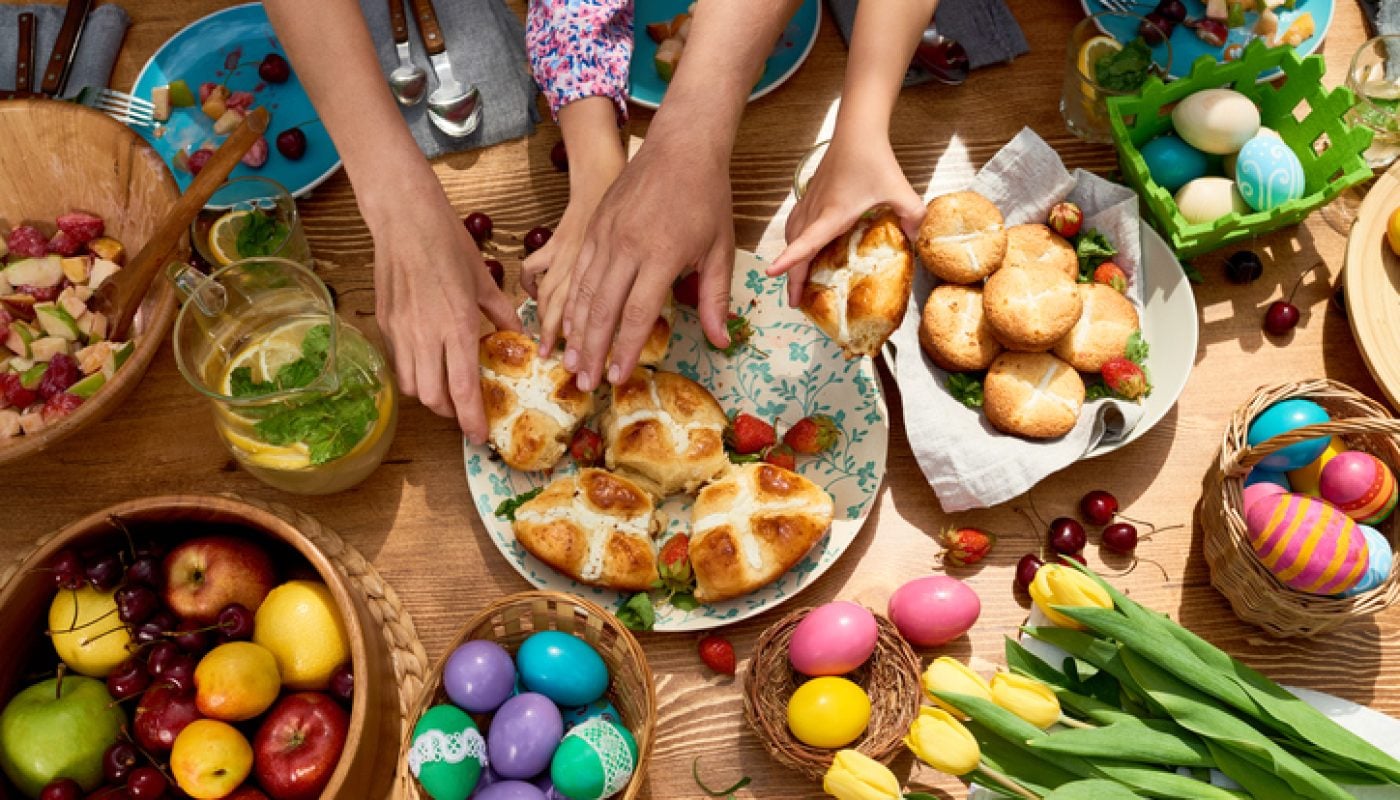
With Easter just around the corner, many of us will be indulging in some delicious dishes and treats. However, it can be easy to forget how much food waste is produced when large quantities of food are prepared, which can have a significant impact on the environment. To make sure that we reduce food waste this Easter, Too Good To Go have put together some helpful tips that will allow us to be more mindful and contribute to a more sustainable future.
Plan ahead so you only buy what you need
Plan your meals for the Easter weekend now so you know exactly what you need to buy. Write a shopping list and then stick to it when you’re in the supermarket – try not to be sucked in by impulse buying. Look to be kitchen savvy in your planning too. For instance, planning multiple meals that utilise the same, or parts of the same, ingredient means that you’re not buying a new set of ingredients for every meal.
Don’t discount fruit and veg based on how it looks
Don’t judge food by its appearance! Oddly-shaped or bruised fruits and vegetables are often thrown away because they don’t look ‘perfect’ but in reality, they taste exactly the same. Even those more mature vegetables are perfect for roasting for the Easter Sunday Roast.
Check your fridge temperature
Keeping your fridge at the correct temperature is also key for keeping your food fresh. Setting it at below 5°C is ideal for extending the life of perishable foods like milk or yoghurts.
Take care of how you store your food
Storing chocolate in the fridge can wreak havoc on the taste and texture of your chocolate. Not only can the chocolate absorb the smells of food around it but storing in the fridge can also increase humidity. Too Good To Go recommends keeping your Easter chocolate in a cool, dark place such as a kitchen cupboard and preferably in an airtight container to keep any unwanted flavours at bay.
Understand date labels and trust your senses with ‘best before’ dates
There’s a big difference between ‘best before’ and ‘use-by’ dates. Often food is still safe to eat after the ‘best before’ date, whereas it’s the ‘use-by’ date that indicates when it’s no longer safe to eat. Before throwing out food that’s past its ‘best before’ date, make sure you use your senses to look, smell and taste whether it’s actually gone off. You’d be surprised how many food items are perfectly good to eat way beyond this date.
Get creative with your leftovers
Nowadays, many of us are in the habit of wanting to eat something new every day, but don’t be afraid to get creative with your Easter leftovers. For example, you can use any lamb roast dinner leftovers in a lamb curry, leftover hot cross buns for a bread and butter pudding and any unwanted chocolate could be used for baking delicious chocolate brownies.
Take care with your portion sizes
Research carried out by Too Good To Go found that 23% of us throw away food at home because there is too little left on their plates. To counteract this, try to find your own hacks for measuring food so that your portion sizes work for you. For example, a standard builder’s mug of rice is usually enough to serve four adults when cooked.